Casino
 Betting
 Games
Games 
 Banking
 Bonuses

Understanding Card Games as A Beginner

- Understanding Card Games as A Beginner
 Author: Lerato Dlamini
 Updated: 1 December, 2025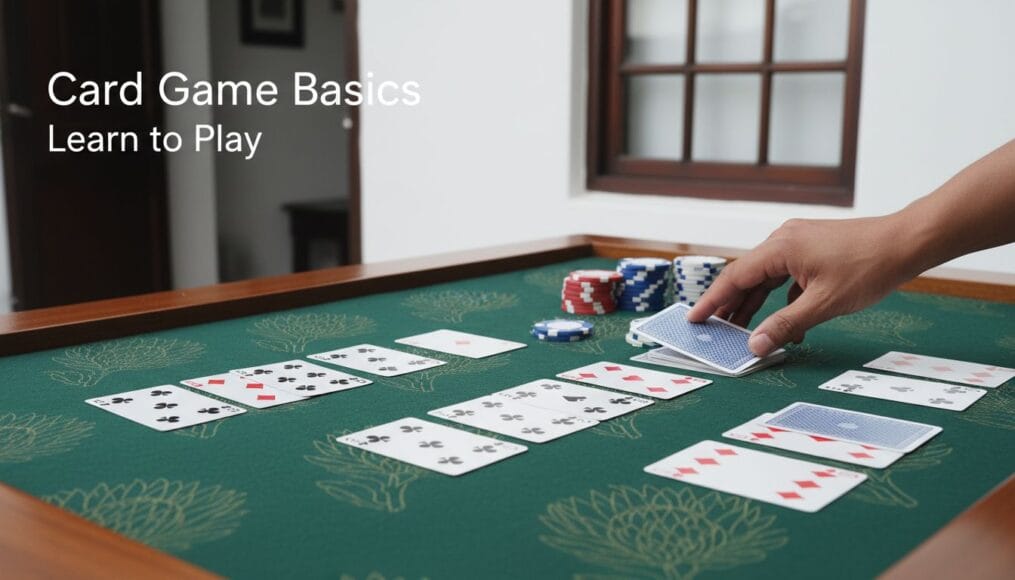
Card games have been a beloved pastime for centuries, captivating players across cultures and continents. From casual family gatherings to high-stakes casino tables, the simple deck of 52 cards offers an almost endless array of entertainment and strategic depth. In South Africa, much like the rest of the world, card games hold a special place, bringing people together for fun, competition, and mental stimulation.
Whether you're a seasoned card shark or just starting your journey into the world of spades, hearts, diamonds, and clubs, understanding the fundamentals is key. This guide will walk you through the basic structure of a standard deck, explore the main categories of card games, and demystify some of the common terminology you'll encounter.
The beauty of card games lies in their diversity. While some are deeply rooted in specific traditions, others, like Baccarat and Blackjack, have achieved global recognition, played in homes and live casinos alike. Let's shuffle up and deal with the essentials.
Understanding the Standard Deck of Cards
At the heart of most card games is the standard 52-card deck. This universal set is divided into four distinct suits, each containing 13 cards. The suits are:
- Spades (♠): Black in colour.
- Clubs (♣): Black in colour.
- Hearts (♥): Red in colour.
- Diamonds (♦): Red in colour.
Within each suit, the 13 cards are ranked from lowest to highest: Ace (often considered 1), 2, 3, 4, 5, 6, 7, 8, 9, 10, Jack, Queen, and King. The Jack, Queen, and King are commonly referred to as “face cards” or “court cards” due to their pictorial representations.
Beyond the standard 52, some games incorporate one or two “Joker” cards. These versatile cards often act as wildcards, capable of substituting for other cards to complete combinations or create powerful hands, adding an extra layer of unpredictability and strategy to the game.
Exploring the Diverse Categories of Card Games
Card games can be broadly categorised based on their core gameplay mechanics and objectives. While rules can vary significantly even within the same category, these classifications help to understand the fundamental nature of each game.
Trick-Taking Games
In trick-taking games, players compete to win “tricks,” which are rounds of play where each player contributes one card. The player who plays the highest-ranking card (or the highest trump card, if applicable) according to the game's rules wins the trick. The goal is often to win a certain number of tricks or to avoid winning specific penalty tricks. Popular examples include Bridge, Spades, and Hearts.
Matching & Rummy-Style Games
These games revolve around forming specific combinations or “melds” of cards, such as sets of the same rank (e.g., three Kings) or runs of consecutive cards in the same suit (e.g., 7, 8, 9 of Hearts). Players typically draw and discard cards, aiming to complete their hand before opponents. Rummy and Gin Rummy are classic examples of this category.
Shedding Games
The primary objective in shedding games is to be the first player to get rid of all the cards in your hand. Players typically play cards that match the rank or suit of the previous card played. These games are often fast-paced and can involve strategic blocking or forcing opponents to draw more cards. While Uno is a popular example (using a custom deck), games like Crazy Eights use a standard deck.
Collection Games
Collection games focus on accumulating specific cards or sets of cards from the deck or from other players. The winner is usually the player who collects the most valuable set or achieves a particular collection goal. Go Fish is a simple, well-known collection game, where players ask others for cards to complete sets.
Comparing Games (Casino Banking Games)
In comparing games, players' hands are directly compared against each other or against a dealer's hand to determine a winner. These are often found in casino settings, where players bet on the outcome. The objective is usually to have a hand that ranks higher than your opponent's or the dealer's, without exceeding a certain value. Iconic examples include Blackjack, Baccarat, and Poker.
Solitaire & Patience Games
Designed for a single player, solitaire games (known as Patience in some regions) involve arranging cards into a specific layout or sequence according to a set of rules. The challenge lies in strategic planning and problem-solving to successfully complete the game. Klondike (the most common form of Solitaire) and FreeCell are widely played examples.
Essential Card Game Terminology for South African Players
As you delve deeper into card games, you'll encounter various terms that are common across many different types of play. Understanding these can significantly enhance your experience, especially when playing with more experienced enthusiasts.
- AGE: Refers to the order of precedence in which players take their turns, often determined by seating position or a specific card dealt.
- BID: A declaration made by a player, typically in trick-taking games, indicating how many tricks they expect to win or a specific score they aim to achieve.
- BLUFF: A strategic move where a player misrepresents the strength of their hand to deceive opponents, often used in games like Poker to encourage others to fold.
- BLACK LADY / BLACK MARIA: Common nicknames for the Queen of Spades, particularly in games like Hearts, where she carries a penalty.
- COURT CARD: Any of the picture cards in a standard deck: Jack, Queen, or King.
- SPOT CARD: Any card from Ace (1) through 10, distinguished from court cards and jokers.
- LONG CARDS: When a player holds a disproportionately high number of cards in a particular suit, often implying other players have few or none of that suit left.
- COUP: A clever or unexpected move that significantly changes the course of the game, often leading to a decisive win.
The world of card games is rich and varied, offering something for everyone, from simple matching games to complex strategic battles. By familiarising yourself with the basic deck structure, game categories, and common terminology, you'll be well-equipped to enjoy the endless possibilities that a pack of cards provides. So, gather your friends, shuffle the deck, and discover your next favourite pastime!

Lerato Dlamini
Content WriterLerato Dlamini, a 35-year-old content writer from the picturesque town of Franschhoek, Western Cape, has a talent for creating compelling, informative articles. Holding a degree in English and Communications from the University of Cape Town, Lerato expertly communicates the intricacies of the casino world to Casinoble's audience. When she's not writing, Lerato dreams of starting a non-profit organization to empower young South African women through education and mentorship.
Most Recent News
Get the latest information